Stages Of Cervical Cancer

Blog/Articles

June 6, 2026
By Dr. Renu Sharma
Updated July 4, 2026
Stages Of Cervical Cancer
Stages Of Cervical Cancer: Understanding its stages, timely diagnosis and effective treatment
Cervical cancer is a type of cancer that affects women all over the world. It starts in the cells of the cervix, which is the lower part of the uterus that connects to the vagina. Finding cancer early is very important for treatment. This is why it is crucial to know the stages of cancer. The stage helps doctors decide the treatment plan and predict what might happen.
At Cureon Medical Tourism, the best medical tourism company in India, patients from countries can get diagnosis and treatment for cervical cancer at top hospitals in India. They work with cancer doctors like Dr Renu Sharma. Dr. Renu Sharma is a much-referred Gynaec Onco Surgeon in Indore with a specialization in the field of advanced gynecologic cancer operations, including the open, laparoscopic, and robotic operations. They use modern medical technology to treat the disease.
What is Cervical Cancer?
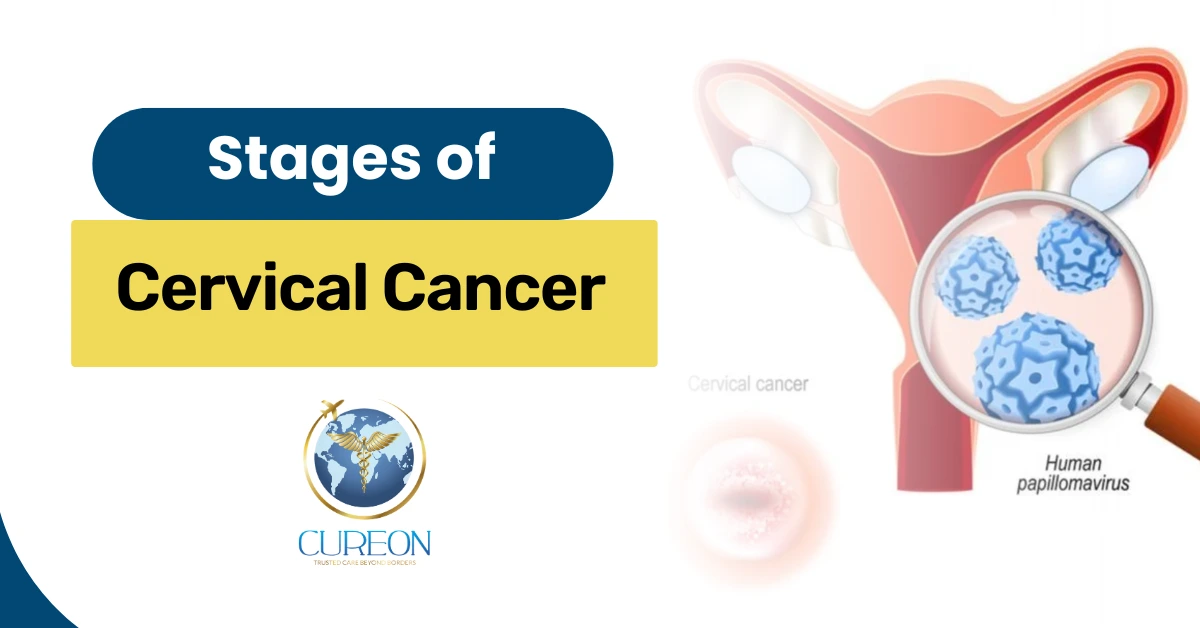
Cervical cancer is the growth of abnormal cells in the cervix, the lower part of the uterus. Cervical cancer usually develops slowly over time. Often it starts with changes in cells caused by a persistent infection with the Human Papillomavirus or HPV. If left untreated these abnormal cells can gradually become cancerous.
Stages of Cervical Cancer
The stages of cancer describe how far the cancer has spread from where it started. Doctors commonly use the FIGO staging system.
Stage 0: Precancerous Changes
Stage 0 is also known as Carcinoma in Situ. At this stage abnormal cells are present on the surface layer of the cervix. Have not spread deeper into surrounding tissues.
Treatment Can be done by:
- Cryotherapy
- Laser therapy
- Loop Electrosurgical Excision Procedure (LEEP)
- Cone biopsy
When detected at this stage treatment success rates are extremely high.
Stage I: Cancer is Limited to the Cervix
In Stage I cancer is found in the cervix. It has not spread to nearby tissues or organs.
a) Stage IA
The cancer is microscopic. It can only be seen under a microscope.
b) Stage IB
The tumor is larger and visible. It is confined to the cervix.
Treatment Can be done by:
- Hysterectomy, a type of surgery
- Fertility-preserving surgery in selected patients
- Radiation therapy
- Chemotherapy in certain cases
Patients diagnosed with Stage I generally get better if treated promptly.
Stage II: Cancer Spreads Beyond the Cervix
At Stage II cervical cancer has spread beyond the cervix and uterus. It has not reached the pelvic wall or the lower part of the vagina.
a) Stage IIA
Cervical cancer has spread to the vagina.
b) Stage IIB
Cervical cancer has spread into tissues surrounding the cervix.
Treatment Can be done by:
- Chemotherapy and radiation therapy
- External beam radiation
- Brachytherapy, which is radiation
Treatment at this stage focuses on preventing further spread and eliminating cervical cancer.
Stage III: Cancer Reaches the Pelvic Area
Stage III cervical cancer indicates that the disease has spread further within the pelvis.
a)Stage IIIA
Cervical cancer has spread to the third of the vagina.
b) Stage IIIB
Cervical cancer has reached the wall or is affecting kidney function.
c) Stage IIIC
Cervical cancer has spread to lymph nodes.
Treatment Can be done by:
- Chemotherapy and radiation therapy
- Needs Advanced Radiation Techniques
- Needs Supportive care for symptom management
Although Stage III is considered advanced many patients respond well to modern treatment approaches for cervical cancer.
Stage IV: Advanced Cervical Cancer
Stage IV is the stage and means the cervical cancer has spread beyond the pelvis.
a) Stage IVA
Cervical cancer has spread to organs such as the bladder or rectum.
b) Stage IVB
Cervical cancer has spread to organs such as the lungs, liver or bones.
- Chemotherapy
- Targeted therapy
- Immunotherapy
- Radiation therapy is done for symptom relief
- Palliative care
The goal at this stage is to control cancer growth, manage symptoms and improve quality of life.
Importance of Early Detection of Cervical Cancer
Cervical cancer screening can detect changes before cancer develops. Common screening methods include:
- Pap smear test
- HPV testing
- Colposcopy when required
Women should follow their doctors recommendations regarding screening schedules especially if they have risk factors such as HPV infection, smoking or a weakened immune system.
Cervical Cancer Treatment in India
India has become a destination for cancer treatment due to its skilled Oncologists, advanced cancer centers and cost-effective treatment options. Patients from around the world choose India for cancer care, including diagnosis, surgery, radiation therapy, chemotherapy and follow-up support.
Cureon Medical Tourism, the Best Medical Tourism Company In India helps International patients access world-class cancer treatment in India by connecting them with hospitals, experienced cancer specialists, visa assistance, travel support, accommodation arrangements and personalized patient care throughout their journey.
Conclusion
Understanding the stages of cancer is essential for timely diagnosis and effective treatment. From Stage 0 to Stage IV each stage requires a treatment approach. Early detection significantly improves treatment, success and survival rates. If you or your loved one is seeking cervical cancer treatment in India, Cureon Medical Tourism, the best medical travel company in Indore can help you access expert care and comprehensive medical support for the best possible outcomes.