Varicose Vein Treatment in India: Laser, RFA or Glue Which Is Suitable?

Blog/Articles

September 17, 2026
By Dr. Alok K. Udiya
Updated October 12, 2026
Varicose Vein Treatment in India: Laser, RFA or Glue Which Is Suitable?
Laser vs RFA vs Glue: Understanding Your Varicose Vein Treatment Options in India
Varicose veins are more than a cosmetic concern. They can cause heaviness, pain, swelling, itching and leg cramps, especially after standing for long hours. When these symptoms affect daily life, a proper vascular evaluation is important.
Today, varicose vein treatment in India includes minimally invasive options such as laser treatment, Radiofrequency Ablation (RFA) and medical glue treatment. These catheter-based procedures close faulty veins without major cuts and usually allow faster recovery.
The suitable treatment depends on your symptoms, vein condition and Doppler ultrasound findings. In this guide, CureOn Medical Tourism, best medical travel company in India, compares laser, RFA and glue treatment to help patients exploring medical tourism in India understand their options.
Which Is the Best Varicose Vein Treatment: Laser, RFA or Glue?
With CureOn Medical Tourism patients can speak directly with specialists like Dr. Alok K. Udiya, best Interventional Radiologist in Indore. He can help explain which treatment might be best for each person’s condition.
Why Is Varicose Vein Treatment Important?
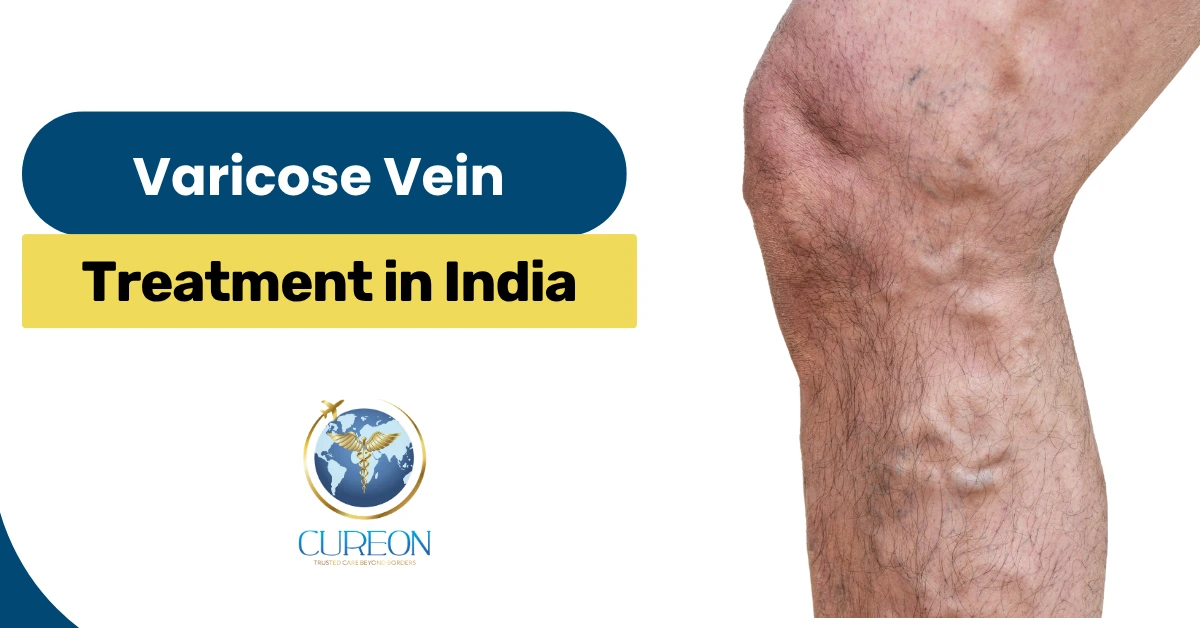
The veins in the legs have valves that help blood flow back to the heart. When these valves get weak or stop working blood can get trapped. This causes the veins to bulge, twist and become visible.
Some people only see the veins and nothing else whereas others suffer from pain, swelling, skin changes or even leg ulcers. These problems can get worse over time if left untreated.
A Doppler ultrasound is often used to check blood flow. It helps identify which veins are not working properly. This information guides the treatment plan based on size, location and symptom severity.
Laser Treatment for Varicose Veins
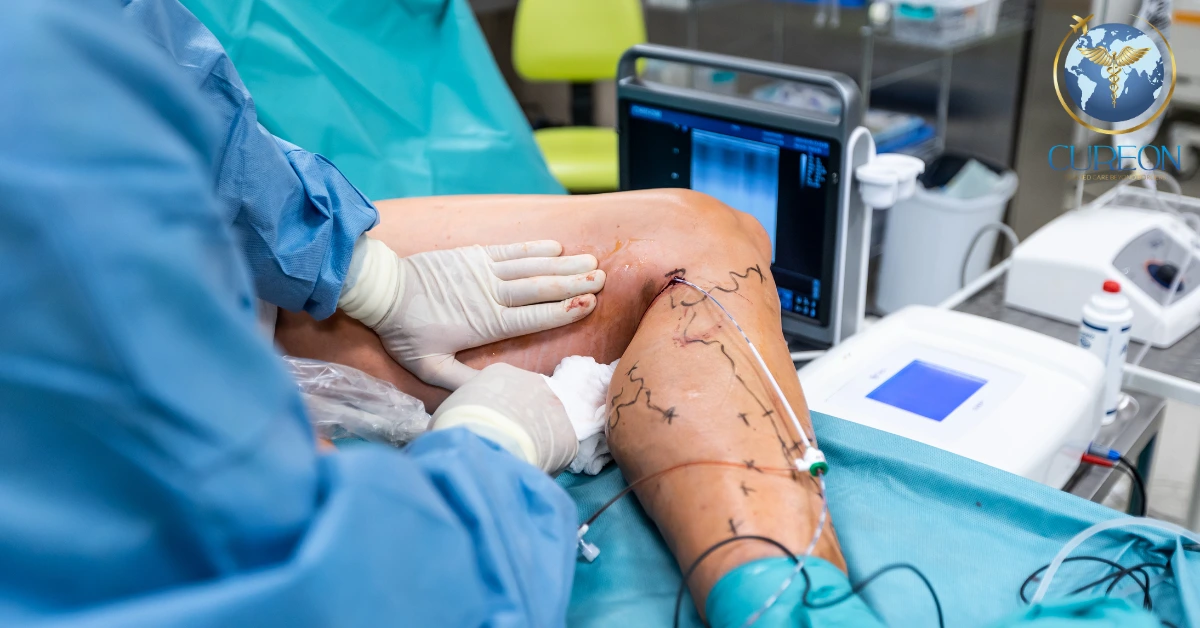
Endovenous Laser Treatment also known as EVLT or EVLA is a minimally invasive and effective method. A thin laser fibre is placed inside the vein under ultrasound guidance. Then the laser creates heat inside the vein making it collapse and seal shut, blood then flows through veins instead.
This treatment is widely trusted, because it uses heat, local or tumescent anaesthesia is usually given. This helps reduce pain and protects tissues.
Most patients can walk after the procedure and many return to activities within a few days depending on how extensive the treatment was and what their doctor recommends.
RFA Varicose Vein Treatment in India: How It Works and Who Is Suitable
Radiofrequency Ablation or RFA works in a different way as compared to laser treatment. Instead of laser light it uses radiofrequency energy to create heat. A catheter is inserted into the faulty vein under ultrasound. The energy heats the wall causing it to collapse and close.
RFA is also a minimally invasive option and is often considered when the vein anatomy suits this method. Both laser and RFA are treatments meaning they use heat to close veins.
The choice between laser and RFA may depend on the vein’s size, location, the availability of equipment and the doctor’s experience. In most cases both are equally effective.
What Is Glue Treatment for Varicose Veins?
Glue treatment is different, it doesn’t use heat. Instead it uses an adhesive, called cyanoacrylate. This special glue is delivered into the faulty vein through a catheter. It seals the shut veins and blood then reroutes through veins.
Because no heat is used, there is no need for amounts of tumescent anaesthesia. This can make the procedure more comfortable. Recent guidelines in India suggest it is a nonthermal non-tumescent option. Patients can walk after the procedure and do not need long recovery time.
Glue treatment is especially helpful for people who prefer to avoid heat or multiple injections but it is not suitable for everyone. Some patients with a history of allergies or certain vein shapes may not be candidates.
Laser vs RFA vs Glue: Which Is Better?
There is no single treatment that is best for every patient. The right option depends on the condition of the veins and the patient’s individual needs.
- Laser Treatment: Uses heat to close the affected vein and is a widely used option for suitable varicose veins.
- RFA Treatment: Uses radiofrequency energy to heat and close the faulty vein. It may be recommended depending on the size and structure of the vein.
- Glue Treatment: A non-thermal option that seals the vein using medical adhesive. It avoids heat and may require fewer anaesthetic injections.
The choice between laser, RFA and glue should not be based only on cost or convenience. Factors such as vein diameter, location, blood flow, symptoms, previous treatments and overall health are important.
A Doppler ultrasound and consultation with a specialist can help determine which varicose vein treatment is most suitable for you.
Varicose Vein Treatment with Dr. Alok K. Udiya
Patients can consult Dr. Alok Kumar Udiya through CureOn Medical Tourism. He is an expert Interventional Radiologist based in Indore. He uses modern imaging guidance to treat problems. He does not recommend the treatment for every patient. Instead, he personalises the plan based on ultrasound results and the patient’s needs.
CureOn Medical Tourism lists minimally invasive treatments in India. These include varicose vein glue treatment. They are available for patients looking to get care with support.
How CureOn Medical Tourism Helps with Varicose Vein Treatment in India
Going for treatment in another city or country can be overwhelming. It involves more than choosing a hospital. Patients need help with appointments, cost estimates, travel plans, accommodation and recovery support.
CureOn Medical Tourism helps with all of this. They assist from the consultation through treatment and follow-up care.
For some treatments CureOn offers fixed package surgery. This means patients know the cost before they travel. There are no surprises.
CureOn’s Ghar Se Ghar Tak approach means they support patients from home to home. They help with travel, hospital coordination, recovery and return plans. Patients can focus on healing, not logistics.
Conclusion
Varicose veins can cause pain, swelling, heaviness and other symptoms that may affect daily life. Today, laser, RFA and glue treatment are commonly used minimally invasive options for varicose vein treatment in India. Laser and RFA use heat to close faulty veins, while glue treatment works without heat.
The best treatment depends on the patient’s symptoms, vein size, location and Doppler ultrasound findings. A proper consultation with an experienced specialist is important before choosing any procedure.
Through CureOn Medical Tourism, patients can consult Dr. Alok K. Udiya, Interventional Radiologist in Indore, and also receive support with treatment planning, hospital coordination, travel, fixed package options and the Ghar Se Ghar Tak approach.
FAQs
1. Which is the best treatment for varicose veins in India?
There is no single best treatment for everyone. Laser, RFA and Glue may all be effective in suitable patients. The right choice depends on Doppler findings, vein anatomy, symptoms and medical history.
2. What is laser treatment for varicose veins?
Laser treatment uses controlled laser energy delivered through a thin fibre to close the faulty vein. Blood then redirects through healthy veins.
3. What is RFA treatment for varicose veins?
Radiofrequency Ablation uses controlled radiofrequency heat through a catheter to close the affected vein.
4. What is Glue treatment for varicose veins?
Glue treatment uses a medical adhesive delivered through a small catheter to seal the faulty vein. It is a non-thermal treatment and generally does not require tumescent anaesthesia along the treated vein.
5. Is Glue better than Laser for varicose veins?
Not necessarily. Glue has advantages for selected patients because it does not use heat, but Laser may be more appropriate for others. A specialist should determine suitability.
6. Is RFA better than Laser treatment?
Both RFA and Laser are established thermal ablation methods. Treatment choice depends on vein anatomy, clinical findings and the treating specialist's recommendation.
7. Can I walk after varicose vein treatment?
Walking is generally encouraged soon after many minimally invasive varicose vein procedures, although patients should follow their treating doctor's specific instructions.
8. Which specialist treats varicose veins in India?
Patients can consult Dr. Alok K. Udiya, Interventional Radiologist, through CureOn Medical Tourism for assessment and minimally invasive vascular treatment planning.
9. How much does varicose vein treatment cost in India?
The cost of varicose vein treatment in India depends on the treatment method, hospital, number of affected veins, and the patient’s condition. CureOn Medical Tourism helps patients understand treatment costs and available package options before the procedure. Exact pricing and inclusions may vary depending on the selected hospital and treatment plan.
10. What is included in end-to-end medical tourism support?
End-to-end medical tourism support may include treatment planning, hospital appointments, travel assistance, stay coordination, procedure support and return travel. CureOn Medical Tourism offers these services through its Ghar Se Ghar Tak support model.